What it is
A tsunami is a series of ocean waves set off by a sudden movement of the seafloor, most often in a large undersea earthquake. When the floor lifts or drops, all the water above it moves with it, and the disturbance spreads out across the ocean as waves. Out in deep water they are low; at the coast they flood low-lying land and drive powerful currents into harbors and bays, for hours or days after the first arrival. The first wave may not be the last or the largest. There is no season for tsunamis: one can strike any ocean coast at any time.
The Weather Service's two tsunami warning centers, the National Tsunami Warning Center in Palmer, Alaska, and the Pacific Tsunami Warning Center on Ford Island, Hawaii, issue four kinds of alert. A Tsunami Warning means a tsunami that may cause widespread flooding is imminent, expected or occurring. A Tsunami Advisory means strong currents or waves dangerous to those in or near the water. A Tsunami Watch means a distant event may later affect the area. A Tsunami Information Statement says an earthquake has occurred, and in most cases that there is no threat of a destructive tsunami. Fig. B sets out the four.
What it is not
It is not a storm surge, Storm tide, storm surge and wave runup FB-EVT-112, the sea driven ashore by a storm's wind and low pressure. A tsunami comes from beneath the sea, in any weather.
It is not a meteotsunami, Meteotsunami FB-EVT-111, whose tsunami-like waves are set off by a fast-moving storm's jump in pressure or wind.
It is not high surf, High surf FB-EVT-107: waves from a distant storm breaking at the shore. A tsunami can bring widespread flooding of the coast itself.
Lookalikes
- Storm surge
- The sea driven ashore by a storm's wind and low pressure, Storm tide, storm surge and wave runup FB-EVT-112. A tsunami comes from the seafloor, in any weather.
- Meteotsunami
- Tsunami-like waves set off by a fast-moving storm's jump in pressure or wind, Meteotsunami FB-EVT-111.
- High surf
- Large waves from a distant storm breaking at the shore, High surf FB-EVT-107. A tsunami can bring widespread flooding of the coast itself.
Machine
The sea lifted from below
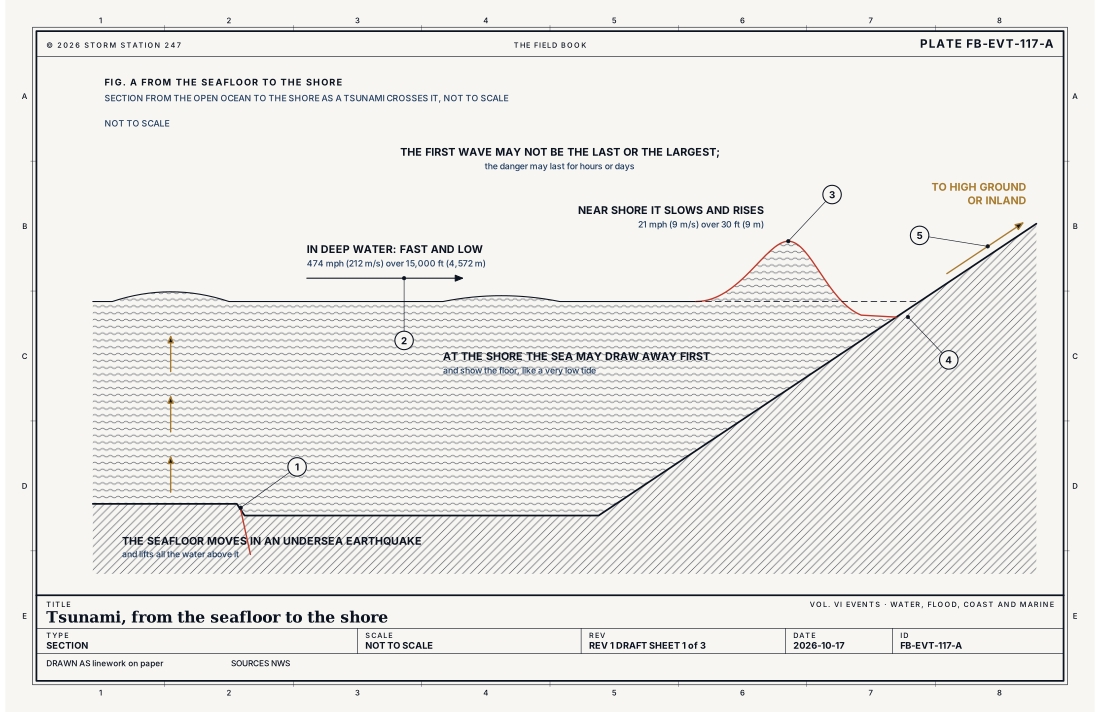
In a large undersea earthquake the seafloor can move suddenly over a wide area. The whole depth of the ocean above it moves too, and the sea surface is lifted or lowered over that area. Gravity pulls it back, and the disturbance spreads outward in every direction as a series of very long waves. Fig. A draws it.
Fast across the deep
A tsunami's waves are far longer than the ocean is deep, so they travel as shallow water waves, at a speed set by the depth of the water alone, by the equation below. Over 15,000 ft (4,572 m) of water a tsunami travels 474 mph (212 m/s) and crosses 1,000 mi (1,609 km) in 2.1 hours; Fig. C draws the speed at every depth. So a tsunami from a distant earthquake can reach a coast hours later, while one from an earthquake near the coast can arrive within minutes.
Slowing, and piling up
As the waves reach shallower water they slow, to 67 mph (30 m/s) over 300 ft (91 m) and 21 mph (9 m/s) over 30 ft (9.1 m). The front of the wave slows first and the water behind catches up, so the wave grows taller as it nears the shore. It may arrive as a fast-rising flood or a wall of water. Sometimes the trough comes first, and the sea drains away suddenly, showing the ocean floor like a very low tide, before the wave returns.
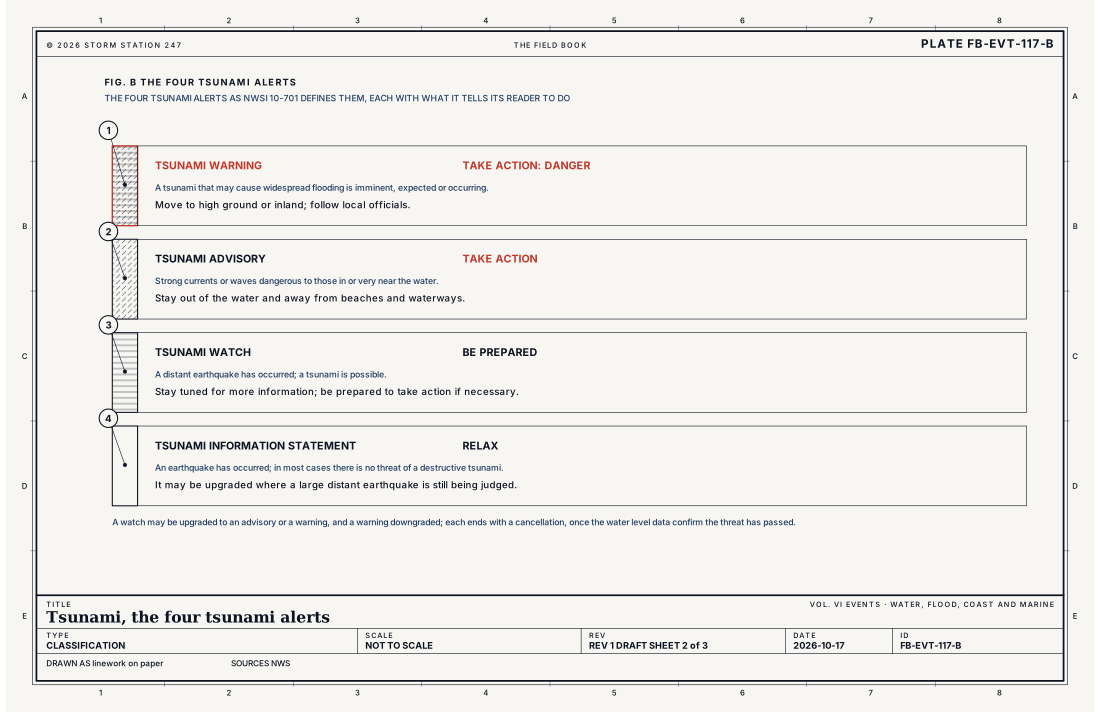
- Tsunami Warning
- Tsunami Advisory
- Tsunami Watch
- Tsunami Information Statement
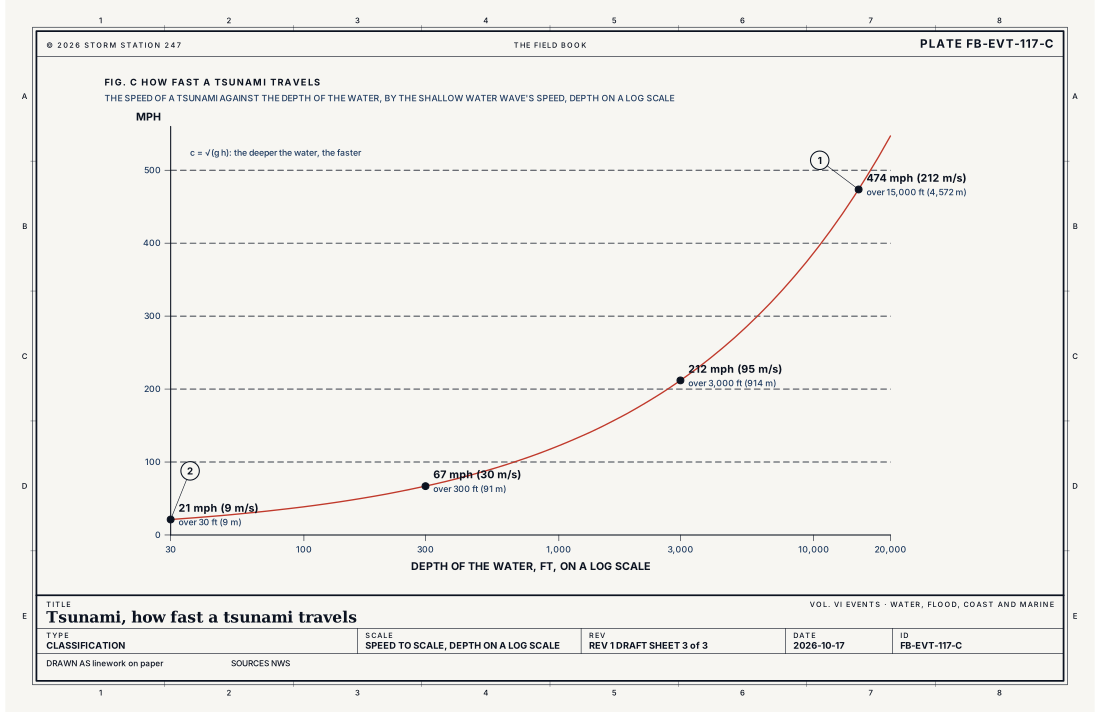
- 474 mph (212 m/s) over 15,000 ft (4,572 m)
- 21 mph (9 m/s) over 30 ft (9 m)
Ingredients
- A sudden movement of the seafloor, most often in a large undersea earthquake, that lifts or drops all the water above it
- Deep water, which carries the waves fast and far
- A coast that rises from deep water, where the waves slow and pile up
- Low-lying shores and harbors in the waves' path
Scales
- time
- minutes to hours to arrive; the flooding and the currents can last for hours or days after the first wave
- horizontal
- an ocean basin; a tsunami can cross a whole ocean
- vertical
- low in deep water; rising as it slows near shore
- orlanski
- macro-beta to meso-gamma
Equations
How fast a tsunami travels
- the speed of the wave, ft s⁻¹
- the acceleration of gravity, 32.17 ft s⁻² (9.81 m s⁻²)
- the depth of the water, ft
Assumes The shallow water wave, for waves far longer than the water is deep, as a tsunami's are even in the deepest ocean. The speed depends on the depth alone, so the wave slows as the water shoals.
Working form Over 15,000 ft (4,572 m) of water a tsunami travels 474 mph (212 m/s), crossing 1,000 mi (1,609 km) in 2.1 hours. Over 300 ft (91 m) it travels 67 mph (30 m/s), and over 30 ft (9.1 m) it slows to 21 mph (9 m/s).
Signatures
- surface
- at the coast; the sea drawing back suddenly or rising like a fast flood; a loud roar from the ocean
- satellite
- nothing in the weather; the cause lies beneath the sea
- radar
- nothing
- sounding
- nothing; a tsunami is not weather
Numbers
| Quantity | Value, and the kind of number it is |
|---|---|
| Tsunami Warning | A tsunami with the potential to generate widespread inundation is imminent, expected or occurring; dangerous coastal flooding and powerful currents may continue for several hours after the first arrivalStandard, Instruction 10-701 |
| Tsunami Advisory | A tsunami with the potential to generate strong currents or waves dangerous to those in or very near the water is imminent, expected or occurring; significant inundation is not expectedStandard, Instruction 10-701 |
| Tsunami Watch | An event which may later affect the watch area; normally issued on seismic information, without confirmation that a destructive tsunami is under wayStandard, Instruction 10-701 |
| Tsunami Information Statement | An earthquake has occurred, or an alert has been issued for another part of the ocean; in most cases no threat of a destructive basin-wide tsunamiStandard, Instruction 10-701 |
| Cancellation | The end of the damaging threat, issued after the water level data confirm it will not strike or has subsidedStandard, Instruction 10-701 |
| The first messages | Based solely on the earthquake's preliminary location, depth and magnitude, all that is known in the first few minutesStandard, Instruction 10-701 |
| Who issues them | The National Tsunami Warning Center in Palmer, Alaska, and the Pacific Tsunami Warning Center on Ford Island, HawaiiStandard, Instruction 10-701 |
| What to do in a warning | Move to high ground or inland, away from the water; follow the instructions of local officialsStandard, Understanding Tsunami Alerts |
| Natural warnings | A strong or long earthquake at the coast, a sudden rise or fall of the ocean, or a loud roar from it: move to safety without waitingStandard, Understanding Tsunami Alerts |
| The waves | The first wave may not be the last or the largest; the danger may last for hours or daysStandard, During a Tsunami |
| When they strike | There is no season for tsunamis; one can strike any ocean coast at any timeStandard, Tsunami Safety |
| Speed of a shallow water wave | The square root of gravity times the depthTextbook, Dean 1991 |
How the station sees it
The tide gauges along the coast record the water level, and a tsunami shows on them as a rise and fall far faster than the tide's, repeated as each wave arrives. The warning centers read the water level data to confirm a tsunami or to cancel an alert. Where a Tsunami Warning, Advisory or Watch is in force, the places it covers carry it, and each alert has its own report.
- Tide gauges: the water level along the coast every 6 minutes, where a tsunami's waves are measured as they arrive
- Severe Alerts: every Tsunami Warning, Advisory and Watch in force, each with its own report
How it is warned
The first messages are based solely on the earthquake's preliminary location, depth and magnitude, all that is known in the first few minutes, so that the warning comes as early as possible. A warning can then be updated, adjusted geographically, downgraded or cancelled as the water level data come in; a cancellation is issued when the data confirm that a destructive tsunami will not strike, or has subsided. A watch is normally issued on the seismic information alone, before a destructive tsunami has been confirmed.
In a Tsunami Warning, move to high ground or inland, away from the water, and follow the instructions of local officials. In a Tsunami Advisory, stay out of the water and away from beaches and waterways. There may not be time for an official warning: if you are at the coast and feel a strong or long earthquake, see a sudden rise or fall of the ocean, or hear a loud roar from it, a tsunami may follow. Move to a safe place at once; do not wait for instructions. On a beach or near the water, any earthquake, however small or short, is reason to move off the beach to high ground or inland as soon as it is safe to. If you are already outside the hazard zone, stay where you are unless officials say otherwise.
Tsunami warnings reach people by local radio and television, marine radio, wireless emergency alerts on phones, NOAA Weather Radio and outdoor sirens. After an earthquake, keep away from fallen power lines and from buildings, bridges and piers, which aftershocks can bring down. Stay out of the hazard zone until officials say it is safe: the danger may last for hours or days.
| VTEC | Phenomenon | The alerts that carry it |
|---|---|---|
TS | tsunami | Tsunami Advisory; Tsunami Warning; Tsunami Watch |
See also
- Storm tide, storm surge and wave runup FB-EVT-112
- Meteotsunami FB-EVT-111
- Coastal flood FB-EVT-105
- High surf FB-EVT-107
- How to read a warning FB-STN-001
Sources
- National Weather Service. Instruction 10-701, Tsunami Warning Center Operations.
- National Weather Service. Understanding Tsunami Alerts.
- National Weather Service. During a Tsunami.
- National Weather Service. Tsunami Safety.
- Dean, R. G. and R. A. Dalrymple. Water Wave Mechanics for Engineers and Scientists (1991).
Definition after the Instruction 10-701, Tsunami Warning Center Operations. Plate FB-EVT-117, revision 1, 2026-10-17. The number is permanent; cite it.